
Blogs
Scale Insects

Scale Insects
One of the more unusual types of insects we encounter in tree care work are scale insects. There are roughly 1,000 species of scale in North America, most of which we never encounter. What they all have in common is how they feed.
Scale insects have needle-like mouths, which they poke into the plant they want to feed on. Most scale feed in the phloem, the vascular tissue moving sugary sap around the tree. They excrete the excess sugary fluid as “honeydew”, a sticky substance that can coat the tree’s leaves and bark and is often noticed on cars and sidewalks below trees with scale. Sometimes a dark mold grows on the honeydew. This can reduce sunlight uptake by leaves, but otherwise the mold does not hurt the tree.
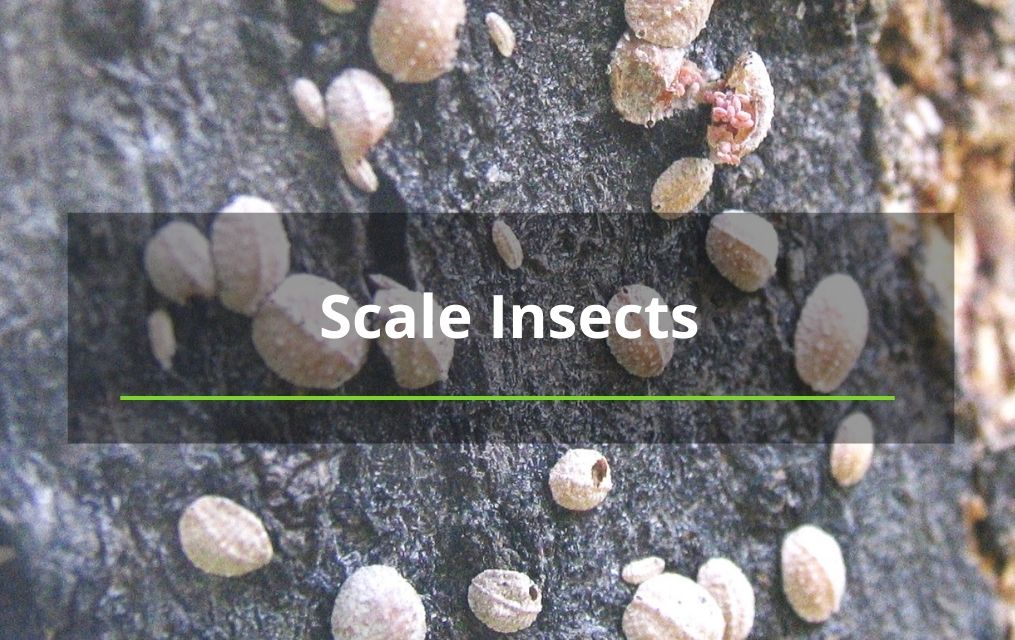
The females only move around as freshly hatched young crawlers (both adult females and crawlers can be seen in the photo above). Once they find “the spot”, they hunker down and stay there. They secrete some sort of waxy covering over their bodies as protection. Males, if they occur (not all species of scale have males!), look more like tiny flies and don’t live very long.
Scale are tricky to control. If the infestation is minor, improving tree health and bolstering natural predators will suffice. Sometimes horticultural oils are used to smother the crawler stage; once under their shells, the females are protected from most pesticides. Systemic insecticides can work but must be used very carefully to avoid harming pollinator insects.
Contact us to find out more about our Albuquerque tree removal services.