
Blogs
Maligned Mistletoe

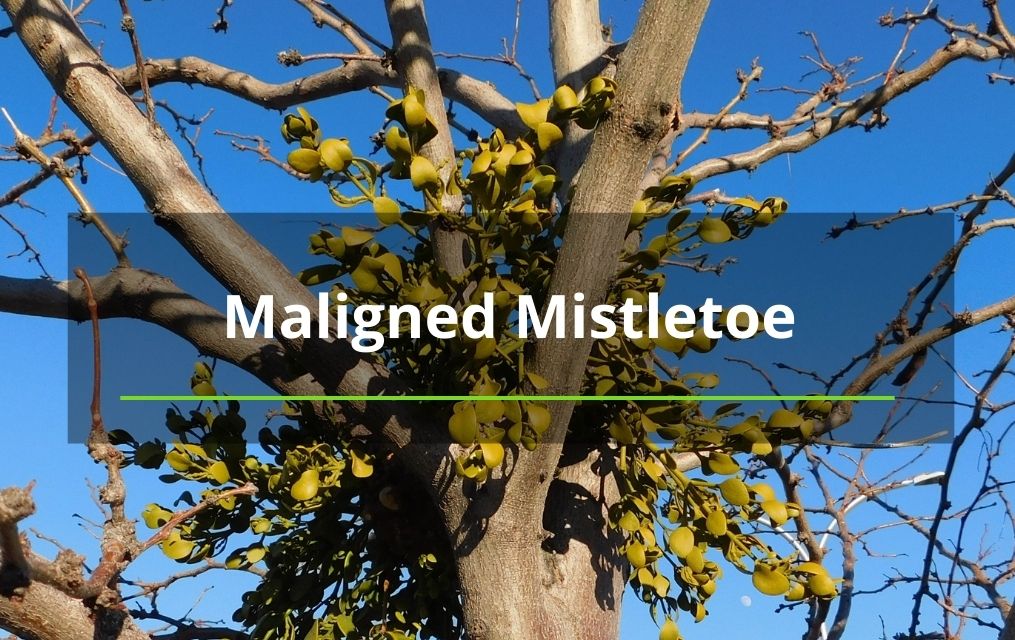
Much Maligned Mistletoe
The invitation to a quick kiss under the mistletoe (once considered bad luck to refuse!) comes down through the centuries from Norse mythology, with links to fertility and love. In modern times, we don’t recall the origins, but we continue to hang it overhead during the holidays. Because it is evergreen (but not a conifer!), it brings some summer color into the winter home.
Mistletoe species are at home on another plant, tapping into some poor trees vascular flow with roots called haustoria that penetrate the host’s sapwood. Using that stolen water, the hemiparasite then carries on photosynthesis without needing to have its own roots in soil. Around here, the common mistletoe on deciduous trees is American mistletoe (Phoradendron leucarpum), while junipers can be host to juniper mistletoe (Phoradendron juniperinum) and pinyon pine to dwarf mistletoe (Arceuthobium divaricatum).
Many birds eat the small fruits that mistletoe produce, and in the process spread seeds around the canopies of host trees. The best host trees are the ones under stress, and those often host large colonies of mistletoe plants. Cottonwood trees are the champs around here for sheer mass of mistletoe!
Managing mistletoe is tricky. It starts with planting species not prone to infestation, so maybe avoid cottonwood and ash. Prune out small, infested branches well below the mistletoe. On large branches and main trunks, repeatedly cut off the mistletoe to slow it down – removing the big parts of the tree would hurt the tree more than leaving the mistletoe.
Contact us to find out more about our Albuquerque tree removal services.