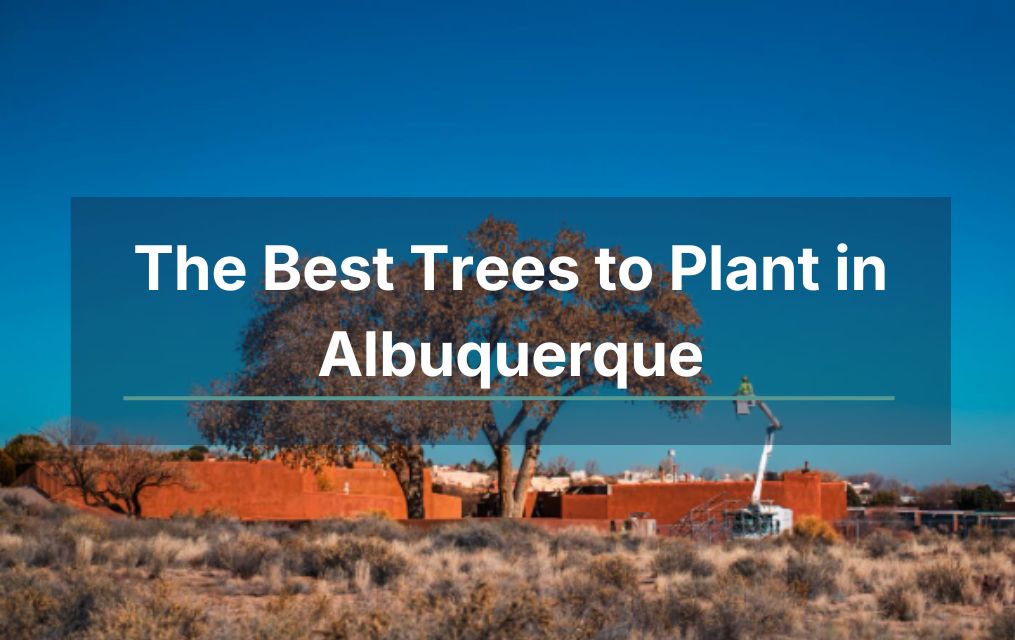
Choosing the right tree to plant in Albuquerque is one of the most impactful decisions a homeowner can make for their property. A well-chosen tree provides shade that lowers cooling costs during our intense summers, increases property value, improves air quality, and contributes to the health of Albuquerque’s urban forest for decades to come. A poorly chosen tree, on the other hand, can struggle with our alkaline soils, demand more water than the landscape can sustain, or develop structural problems that lead to expensive maintenance or premature removal.
At Legacy Tree Company, our ISA Certified Arborists help Albuquerque homeowners and property managers select the right species for their specific site conditions, then handle installation with careful attention to the root system. Because planting day is one of the most important events in the life of an urban tree, and getting it right sets the course for everything that follows.
What Makes Albuquerque’s Climate Unique for Tree Planting
Before selecting a species, it helps to understand the specific conditions trees face in our region. Albuquerque sits at roughly 5,000 feet of elevation in the high desert of central New Mexico. That combination creates a set of challenges that many commonly available nursery trees are not well-equipped to handle.
Alkaline soils. Most of Albuquerque’s native soil ranges from sandy to clay-heavy and tends to be alkaline, often with a pH well above 7.0. Many tree species that perform beautifully in acidic or neutral soils struggle here, developing nutrient deficiencies that show up as yellowing leaves and stunted growth.
Limited rainfall. Albuquerque averages roughly 9 to 10 inches of rainfall per year, with the bulk of that arriving during the brief monsoon season in July and August. Trees that cannot tolerate extended dry periods between waterings are poor candidates for our landscape.
Intense sun and heat. Summer temperatures regularly exceed 90 degrees, and UV exposure at our elevation is significantly more intense than at lower altitudes. Trees need to tolerate sustained heat and strong sunlight without scorching.
Temperature swings. Albuquerque experiences wide temperature variation, with winter lows occasionally dropping below zero and summer highs pushing past 100 degrees. Trees planted here need to handle both ends of that range.
Wind. Spring wind events and monsoon storms can put real stress on young trees and test the structural integrity of mature ones.
Understanding these conditions is the first step toward making a smart planting decision. The species recommended below are proven performers in Albuquerque’s high desert environment.
Best Large Shade Trees for Albuquerque
If your primary goal is substantial shade coverage and long-term canopy development, these species deliver.
Bur Oak (Quercus macrocarpa)
Bur oak is one of the most impressive shade trees you can plant in Albuquerque. It is a native species that tolerates extremely dry conditions once established, grows well in alkaline, loamy, sandy, and clay soils, and develops a deep taproot system that provides exceptional stability. Mature bur oaks can reach over 50 feet tall and wide, with deeply lobed leaves and a stately, spreading canopy. They are long-lived trees that can persist for centuries under the right conditions.
Bur oak’s tolerance for Albuquerque’s challenging soil and climate conditions makes it a standout choice for homeowners who want a legacy tree that will provide shade for generations. Legacy Tree Company’s arborists have written about bur oak’s performance in our region and frequently recommend it during tree planting consultations.
Mature size: 50+ feet tall and wide
Growth rate: Medium
Water needs: Deep, infrequent watering once established; drought tolerant
Best for: Large yards, properties with room for a substantial canopy
Kentucky Coffee Tree (Gymnocladus dioicus)
Kentucky coffee tree has become extremely popular in Albuquerque in recent years, and for good reason. It is a very large, tough shade tree that adapts to both dry and moist conditions, tolerates full sun, and performs well in a wide range of soil types. Its coarse, open branching pattern creates filtered shade, and its deeply furrowed bark provides visual interest in winter. The compound leaves give the tree a tropical look during the growing season.
This species is considered drought tolerant once established, making it well-suited to Albuquerque’s water-conscious landscape. It is an excellent choice for parkways, front yards, and backyards where homeowners want a bold shade tree that requires minimal maintenance.
Mature size: 40 to 60 feet tall, 30 to 40 feet wide
Growth rate: Medium
Water needs: Moderate to low once established
Best for: Large residential lots, commercial properties, street plantings
Chinese Pistache (Pistacia chinensis)
Chinese pistache is one of the most versatile and visually rewarding shade trees for the Albuquerque area. It is very drought tolerant, handles desert heat with ease, and adapts to a wide range of soil conditions including our alkaline soils. It grows to roughly 30 to 40 feet tall and wide, developing a rounded, symmetrical canopy that provides dense shade.
One of its biggest selling points is its fall color. Chinese pistache produces some of the most vibrant autumn foliage in the Albuquerque landscape, turning brilliant shades of orange, red, and crimson. In a region where dramatic fall color is rare, this tree stands out.
Mature size: 30 to 40 feet tall and wide
Growth rate: Moderate
Water needs: Low once established
Best for: Residential shade, street trees, any site with full sun
Best Medium and Small Trees for Albuquerque
Not every property has room for a 50-foot oak. These mid-size and smaller species work well in tighter spaces, courtyards, and as accent plantings.
Golden Rain Tree (Koelreuteria paniculata)
Golden rain tree is a favorite among Albuquerque arborists and homeowners alike. It grows 30 to 40 feet tall and wide, is heat and drought tolerant, and thrives in our alkaline soils. Its most striking feature is the explosion of bright yellow flowers that appear in mid-summer, followed by papery, lantern-shaped seed pods that add ornamental interest well into fall. NMSU has recommended golden rain tree for its tolerance to drought, temperature extremes, and challenging growing conditions, and the species is now commonly found in landscapes throughout Albuquerque and Santa Fe.
Legacy Tree Company has written about golden rain tree’s performance in our area, and it is a species their arborists frequently recommend for residential and commercial plantings. It is relatively low-maintenance, resistant to most pests and diseases, and works well as both a shade tree and an ornamental specimen.
Mature size: 30 to 40 feet tall and wide
Growth rate: Moderate to fast
Water needs: Low once established
Best for: Residential yards, parks, street plantings, urban landscapes
Desert Willow (Chilopsis linearis)
Desert willow is a native southwestern tree that thrives in Albuquerque’s hot, dry conditions. It is compact and somewhat shrubby, growing 15 to 30 feet tall with slender leaves and showy pink, trumpet-shaped flowers that bloom from late spring through summer. The flowers attract hummingbirds and pollinators, and the long, pencil-like seed pods give the tree year-round visual character.
Despite its name, desert willow is not a true willow, so homeowners do not need to worry about the aggressive root systems that willows are known for. It is extremely drought tolerant, fast-growing when young, and performs well in Albuquerque’s lowland areas. It works especially well as an accent tree, in courtyards, or along property borders.
Mature size: 15 to 30 feet tall, 10 to 20 feet wide
Growth rate: Fast when young, slowing with maturity
Water needs: Very low once established
Best for: Smaller yards, accent plantings, xeriscape landscapes
[Image Placeholder 6: Desert willow in bloom with pink trumpet-shaped flowers] Alt text: Native desert willow tree in bloom with pink trumpet-shaped flowers in an Albuquerque landscape
Redbud (Cercis spp.)
Redbud is one of the most visually striking ornamental trees you can plant in Albuquerque. It stays relatively compact, typically reaching 15 to 20 feet, making it ideal for smaller yards or as an accent tree under larger canopies. In early spring, redbud produces vibrant pink-purple blooms that appear directly on the branches before the leaves emerge, creating a spectacular display.
Western redbud varieties are better adapted to our dry conditions than eastern species. When planted in a spot with some afternoon shade protection and given consistent deep watering during establishment, redbud can perform well in the Albuquerque area. It is an excellent choice for homeowners who want spring color and visual interest without committing to a large shade tree.
Mature size: 15 to 20 feet tall and wide
Growth rate: Moderate
Water needs: Moderate; benefits from supplemental irrigation
Best for: Courtyards, accent plantings, small residential lots
Escarpment Live Oak (Quercus fusiformis)
Escarpment live oak is an evergreen species that provides year-round shade and visual screening. Depending on water availability and soil conditions, it can range from a large shrub to a substantial tree with a wide-spreading crown. Its deep green, glossy leaves provide heavy shade, and mature specimens develop massive trunks with thick limbs and rough, dark bark.
This oak is well-adapted to Albuquerque’s conditions and has become increasingly popular in residential and commercial landscapes. It should be watered deeply when stressed to avoid susceptibility to oak wilt and root rot, but it is otherwise a low-maintenance, long-lived choice.
Mature size: Variable, 20 to 40+ feet depending on conditions
Growth rate: Slow to moderate
Water needs: Low to moderate; deep watering during drought
Best for: Year-round screening, large residential lots, commercial properties
Best Drought Tolerant Trees for Albuquerque
For homeowners focused on water conservation and xeriscape-friendly landscaping, these species require minimal supplemental irrigation once established.
Honey Mesquite (Prosopis glandulosa)
Mesquite is synonymous with the desert Southwest. Honey mesquite develops a deep taproot system that allows it to access moisture well below the soil surface, making it one of the most genuinely drought tolerant trees available. It grows 20 to 30 feet tall with a spreading canopy of fine, ferny foliage and fragrant yellow flowers in spring.
Mesquite does not transplant well due to its deep taproot, so selecting healthy nursery stock and planting it correctly from the start is critical. Legacy Tree Company’s arborists can help ensure proper species selection and planting technique to give mesquite the best chance of long-term success.
Mature size: 20 to 30 feet tall and wide
Growth rate: Moderate
Water needs: Very low once established
Best for: Xeriscape landscapes, naturalistic plantings, large residential lots
Afghan Pine (Pinus eldarica)
Afghan pine is one of the best desert-adapted pines for the Albuquerque area. It is a relatively fast-growing evergreen that makes an excellent windbreak or visual screen between properties. Its long needles, growing in pairs up to 5 to 6 inches, provide year-round greenery in a landscape that can look barren in winter. Afghan pine handles our heat and limited rainfall well, though it does not tolerate temperatures below zero degrees, which can occasionally be a factor in Albuquerque’s higher elevation neighborhoods.
Mature size: 30 to 60 feet tall, 20 to 30 feet wide
Growth rate: Moderate to fast
Water needs: Low once established
Best for: Windbreaks, privacy screening, evergreen structure
Two-Needle Pinon Pine (Pinus edulis)
The two-needle pinon is the New Mexico state tree and one of the most drought tolerant trees native to our region. It is a slow-growing, compact evergreen that retains its needles year-round and produces the pinon nuts that have been a cultural and culinary staple in New Mexico for centuries. Pinon grows well in poor, rocky soils and requires very little supplemental water once established.
While it does not provide the broad canopy shade of a bur oak or Chinese pistache, pinon brings native character, year-round green structure, and wildlife value to any Albuquerque landscape. It is an especially good choice for properties at higher elevations in the foothills and East Mountains.
Mature size: 15 to 25 feet tall and wide
Growth rate: Slow
Water needs: Very low
Best for: Native landscapes, higher elevation properties, xeriscape designs
Trees to Think Twice About in Albuquerque
Not every tree that looks appealing at the nursery is a good fit for our conditions. These are species that Legacy Tree Company’s arborists see causing problems most frequently.
Siberian Elm (Ulmus pumila)
Siberian elm grows aggressively and is one of the most commonly removed trees in the Albuquerque area. It seeds prolifically, pops up in locations where it was never intentionally planted, and develops weak wood that is prone to branch failure. Removing Siberian elm is complicated by its tendency to resprout from the stump and roots, often requiring targeted chemical treatment to fully eliminate. If you have Siberian elms you did not plant, Legacy Tree Company’s removal team has the experience and licensing to handle them.
Tree-of-Heaven (Ailanthus altissima)
Tree-of-heaven is another aggressive invasive species that causes problems in Albuquerque. It spreads rapidly through root suckers and can send up dozens of new shoots after a single stem is cut. Its wood is weak, its root system can damage infrastructure, and it outcompetes more desirable native and adapted species. This is a tree to remove, not to plant.
Valley Cottonwood (Populus deltoides ssp. wislizeni)
Valley cottonwood is iconic along the Rio Grande, and it is a beautiful part of Albuquerque’s natural landscape. However, cottonwoods are generally not recommended for residential planting due to their aggressive, shallow root systems that can heave sidewalks, damage foundations, and compromise underground utilities. They also have relatively weak wood with a higher risk of branch failure. If you love the look of cottonwoods, a lanceleaf cottonwood (cottonless variety) planted well away from structures and hardscape may be a better option, but only on larger properties with ample space.
Why Planting Technique Matters as Much as Species Selection
Choosing the right tree is only half the equation. How a tree is planted on day one has a direct impact on its health and structural integrity for the rest of its life. Legacy Tree Company’s arborists emphasize several critical factors that many homeowners and even some landscapers overlook.
Root Crown Depth
The root crown, where the trunk transitions into the root system, must sit at the soil surface once planting is complete and the soil has settled. Trees planted too deeply often struggle as roots suffocate in low-oxygen soil. This is one of the most common planting mistakes in Albuquerque, and it can take years for the symptoms to become obvious.
Correcting Circling Roots
Trees that have spent time in nursery containers often develop circling roots at the edge of the root ball. If these are not corrected at the time of planting, they can slowly strangle the tree years later, restricting the flow of water and nutrients. Legacy Tree Company’s arborists are trained to identify and correct circling roots during installation, giving the tree a clean start.
Inspecting Nursery Stock
Not every tree at the nursery is worth planting. Legacy Tree Company’s arborists inspect each specimen for structural defects, root problems, signs of disease, and overall vigor before approving it for installation. Rejecting poor nursery stock is how they avoid leaving clients with trees that are destined to become problems.
Site-Matching
A tree needs to be genetically suited to the conditions on your specific site, not just the Albuquerque area in general. Factors like soil composition, sun exposure, available space, proximity to structures and utilities, drainage patterns, and irrigation all influence which species will perform best in a particular location. Legacy Tree Company’s consultation process evaluates all of these variables before making a recommendation.
Best Time to Plant Trees in Albuquerque
Fall is generally the best time to plant trees in Albuquerque. Cooler temperatures reduce transplant stress, and the tree has several months to establish roots before the demands of summer heat arrive. Early spring, before temperatures begin climbing, is also a good planting window.
Avoid planting in the peak of summer when heat stress can overwhelm a newly planted tree, and avoid late fall planting when the ground may begin to freeze before roots have had time to establish.
Caring for Newly Planted Trees in Albuquerque
The first two to three years after planting are the most critical period for any new tree. During this time, the tree is working to establish its root system in native soil, and it is more vulnerable to drought stress, heat damage, and wind.
Watering. New trees need consistent deep watering during their establishment period. A properly designed drip irrigation system that delivers water to the root zone without pooling around the trunk is the most effective approach in Albuquerque’s dry climate. Legacy Tree Company designs and installs irrigation systems tailored to your specific landscape and tree species.
Mulching. A 3 to 4 inch layer of mulch around the base of the tree (kept away from the trunk) helps retain soil moisture, moderate soil temperature, and suppress weed competition. Legacy Tree Company produces high-quality arborist mulch from their tree care operations and uses it extensively to improve landscapes.
Structural pruning. Young trees benefit from early structural pruning to develop a strong central leader, encourage wide-angle branch attachments, and eliminate competing stems. Investing in structural pruning early prevents expensive corrective work or premature removal later.
Monitoring. Keep an eye on leaf color, growth rate, and overall vigor. If a newly planted tree shows signs of stress, yellowing, or dieback, a consultation with a certified arborist can identify the cause early and correct it before the problem becomes serious.
Frequently Asked Questions About Planting Trees in Albuquerque
What is the fastest-growing shade tree for Albuquerque?
Among reliable, long-lived species, golden rain tree and Kentucky coffee tree offer moderate to fast growth rates while still developing strong structure. Avoid planting trees that are marketed primarily for fast growth, as these species often develop weak wood, shallow roots, and structural problems that lead to expensive maintenance down the road.
Can I plant a fruit tree in Albuquerque?
Yes. Apricots, peaches, plums, apples, and cherries all perform well in the Albuquerque area when properly cared for. Fruit trees should be pruned during dormancy, from late January through early March. Stone fruits like peaches and apricots do especially well here, though they benefit from late-blooming varieties to reduce frost damage risk.
How much does it cost to have a tree professionally planted?
Costs vary based on the species, the size of the tree at planting, site access, and whether irrigation or soil amendment is included. Legacy Tree Company provides complimentary estimates for tree planting projects and can walk you through the options for your property and budget.
How much water does a new tree need in Albuquerque?
Newly planted trees in Albuquerque typically need deep watering two to three times per week during the summer and less frequently during cooler months. The exact amount depends on the species, soil type, and sun exposure. Legacy Tree Company’s arborists provide specific watering recommendations as part of every planting project.
Does Legacy Tree Company help choose which tree to plant?
Yes. Species selection is a core part of Legacy Tree Company’s tree planting service. Their ISA Certified Arborists evaluate your site conditions, discuss your goals, and recommend species that are genetically suited to perform well in your specific landscape for decades to come.
Plant the Right Tree in the Right Place
The best time to plant a tree was twenty years ago. The second best time is now. But making sure it is the right tree, in the right place, planted the right way is what separates a landscape investment from a landscape headache. Legacy Tree Company’s ISA Certified Arborists bring the knowledge of Albuquerque’s soils, climate, and tree species to every planting project, along with the hands-on expertise to give your new tree the start it deserves.
Contact Legacy Tree Company at (505) 312-8865 or visit legacytreecompany.com/estimate to schedule your planting consultation.