A tree that is losing leaves, yellowing in patches, oozing from the bark, or showing branch dieback is trying to tell you something. The challenge is figuring out exactly what. Tree health problems in Albuquerque rarely have a single, obvious cause. Our alkaline soils, limited rainfall, intense sun, and high elevation create baseline stress that makes trees vulnerable to diseases and pests that would not gain a foothold under better conditions.
At Legacy Tree Company, we approach tree disease diagnosis from the ground up. Our team includes two former NMSU Horticulture Extension Agents who hold master’s degrees in entomology and botany, giving us a diagnostic depth that most tree services cannot match. We always start by evaluating the overall resource profile of the landscape, because well-resourced trees are healthier trees. Only after understanding the full picture do we recommend targeted treatment, and sometimes the best recommendation is no chemical treatment at all.
Iron Chlorosis: Albuquerque’s Most Common Tree Problem
According to NMSU’s Plant Diagnostic Clinic, iron deficiency is one of the most common landscape plant disorders in New Mexico. Iron is usually present in Albuquerque soils, but alkaline chemistry locks it into forms that tree roots cannot absorb.
The classic symptom of iron chlorosis is interveinal yellowing: leaf tissue turns yellow while the veins remain green, usually most noticeable on the newest leaves in spring. In severe cases, leaves can turn almost white or develop necrotic spots. Species particularly susceptible in Albuquerque include maples, sycamores, willows, mulberry, photinia, and many fruit trees.
Legacy Tree Company evaluates soil pH, drainage, irrigation, and root health before recommending any intervention. In mild cases, improving soil conditions and adjusting watering practices may be enough. For moderate to severe cases, soil amendments or direct nutrient applications may be warranted. The goal is always to address the root cause rather than mask the symptom.
Cytospora Canker: A Widespread Fungal Threat
Cytospora canker is one of the most damaging fungal diseases in the Albuquerque area. The spores are essentially ubiquitous in the environment. Whether they become a problem depends on the tree’s ability to fight them off.
Infected branches typically wilt and die, often starting with leaves that emerge normally in spring but yellow, wilt, and die by mid-season. You may notice discolored or oozing bark, spongy dead wood, or sunken cankers. In Albuquerque, cytospora is particularly common on stone fruit trees, apple trees, cottonwoods, poplars, and aspens.
There is no chemical cure for cytospora. Treatment focuses on improving overall tree health through better water management, soil improvement, and pruning out infected branches. For trees that are severely compromised, Legacy Tree Company will be honest that removal may be the most responsible option.
Mistletoe: A Genuine Health Concern
Mistletoe is a parasitic plant that draws water and nutrients from its host, weakening branches and reducing vigor over time. Broadleaf mistletoe appears as dense, green, ball-shaped clusters in the branches of deciduous trees and is especially visible in winter. Dwarf mistletoe, which affects conifers, is smaller but causes deformed branches called witches’ brooms.
In Albuquerque, broadleaf mistletoe is common on cottonwoods, elms, and locusts. Management involves pruning infested branches well below the point of attachment to remove the parasitic root system embedded in the host wood. Simply cutting the visible mistletoe off at the surface will not eliminate it but can slow it down. Legacy Tree Company’s arborists assess each case individually and set realistic expectations about long-term management.
Scale Insects: Quiet and Destructive
Scale insects are among the most underrecognized pests affecting Albuquerque trees. They appear as small, raised bumps on branches, twigs, or undersides of leaves. Pinyon needle scale is common on pinon pines in the foothills. Symptoms include yellowing or dropping leaves, sticky honeydew residue, sooty mold, and general canopy thinning.
Legacy Tree Company follows Integrated Pest Management principles for scale, which starts with assessing the tree’s resources. The team often recommends planting perennials that attract beneficial insects, including parasitoid wasps whose larvae feed on scale. When chemical treatment is warranted, applications are carefully timed to critical points in the pest’s life cycle. One firm boundary: Legacy Tree does not treat insect-pollinated plants with systemic insecticides, even when such treatments might reduce an infestation. Protecting pollinators is non-negotiable.
Aphids: Visible but Usually Manageable
Aphids are soft-bodied sap-feeding insects commonly found on elms, ash, cottonwoods, fruit trees, and ornamentals in Albuquerque. They produce honeydew that leads to sooty mold on leaves and surfaces below the tree. In most cases, natural predators including lady beetles, lacewing larvae, and parasitoid wasps bring populations under control without intervention. Legacy Tree Company emphasizes supporting these biological controls and improving tree health rather than spraying at the first sign of aphids. When populations are severe, horticultural oils and insecticidal soaps applied at the right time can reduce numbers without harming beneficial insects.
Fire Blight: A Fast-Moving Bacterial Disease
Fire blight, caused by the bacterium Erwinia amylovora, affects trees in the rose family. In New Mexico, it is most common on apple, pear, crabapple, pyracantha, and photinia.
The hallmark symptom is branches that look as though they have been scorched by fire. Terminal shoots curl into a shepherd’s crook shape. Blossoms, fruit, and leaves turn brown to black, shrivel, and remain attached to the tree. There is no cure once tissue is infected. Management focuses on pruning out infected branches well below the visible edge of the infection with sanitized tools and selecting resistant cultivars when planting new trees.
Bark Beetles: A Sign of Deeper Stress
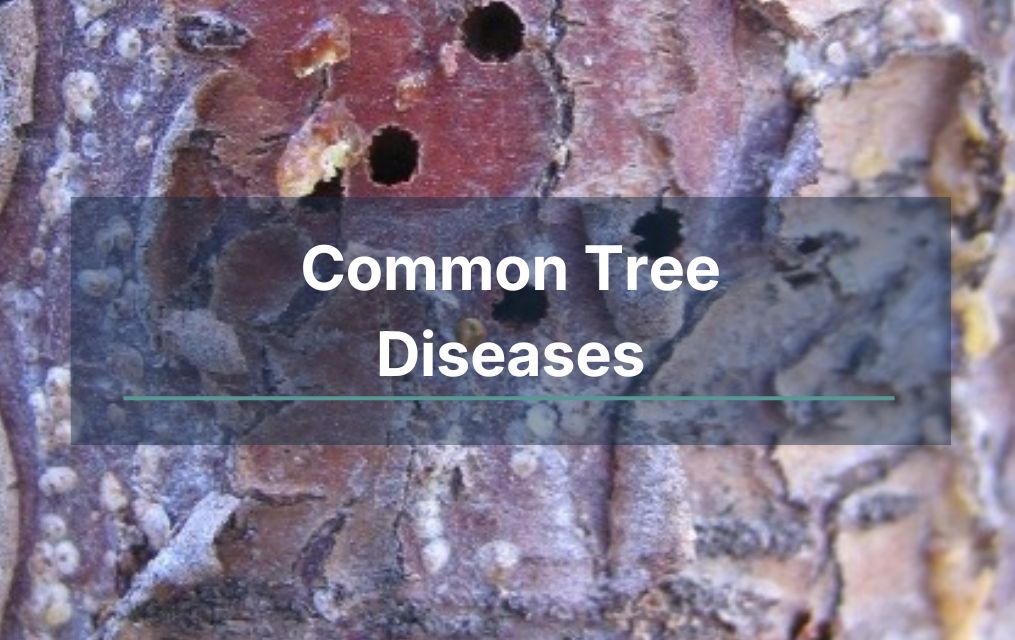
Bark beetles primarily target pinon pines and other conifers in the Albuquerque area, especially during prolonged drought. Early signs include small bore holes, sawdust-like frass, and pitch tubes on the trunk. As the infestation advances, foliage fades from green to yellow to reddish-brown, typically starting at the top of the canopy.
Bark beetles are almost always a secondary problem, targeting trees already weakened by drought or root damage. A healthy, well-watered pinon can usually produce enough resin to push out a boring beetle. A stressed tree cannot. Prevention through proper irrigation, soil care, and overall tree health is the most effective strategy. Once a tree is heavily infested, treatment is generally not effective and removal may be recommended to prevent spread.
Drought Stress: The Problem Behind the Problem
Chronic drought stress is not a disease, but it mimics the symptoms of many and is the underlying driver behind a significant portion of tree health problems in Albuquerque. Yellowing leaves, premature leaf drop, branch dieback, and thin canopies can all result from a tree that has never received adequate deep watering. Many residential trees are irrigated at levels sufficient for turf but inadequate for tree root zones.
This is where Legacy Tree Company’s resource-first approach delivers the most value. Before diagnosing a pest or disease, the team evaluates whether the tree’s basic needs are being met. Correcting irrigation and soil conditions often resolves visible symptoms without any chemical treatment.
When to Call an Arborist
Not every cosmetic issue requires professional intervention. Minor pest activity, seasonal leaf drop, and slight discoloration can all be normal in Albuquerque’s climate. However, you should call a certified arborist if you notice widespread yellowing with green veins, multiple branches dying in a single season, oozing or discolored bark, fungal growth on the trunk or base, sudden significant leaf drop outside of normal fall timing, visible insects in large numbers, or canopy thinning that has progressed over multiple years.
Frequently Asked Questions
Can a diseased tree be saved?
It depends on the disease, how advanced it is, and the overall condition of the tree. Many trees with early-stage problems can be saved through improved care, targeted pruning, and strategic treatment. Legacy Tree Company will be honest with you about what is realistic and will not sell treatments that will not produce meaningful results.
How much does tree disease diagnosis cost?
Legacy Tree Company provides complimentary estimates for general tree work. For complex health issues requiring in-depth diagnostic assessment, a paid evaluation may be recommended to ensure you receive a thorough, science-based analysis.
What areas does Legacy Tree Company serve?
Legacy Tree Company serves Albuquerque, Corrales, Los Ranchos, Rio Rancho, Placitas, Tijeras, Cedar Crest, Belen, and Santa Fe.
Get Answers from Albuquerque’s Tree Disease Specialists
If your trees are showing signs of stress, disease, or pest activity, the first step is an accurate diagnosis. Legacy Tree Company brings two former NMSU Horticulture Extension Agents, 11 ISA Certified Arborists, and a commitment to Integrated Pest Management to every consultation. We start at the roots, evaluate the full picture, and recommend only what is genuinely needed.
Contact Legacy Tree Company at (505) 312-8865 or visit legacytreecompany.com/estimate to schedule your tree health assessment.