A tree that has provided shade and beauty for decades can become a serious liability without much warning. Internal decay, root damage, co-dominant stems with weak attachments, and pest-related decline can all compromise a tree’s structural integrity long before the damage becomes visible from the ground. In Albuquerque, where drought stress, monsoon wind events, and alkaline soils weaken trees year after year, understanding the risk your trees pose to people and property is not optional. It is a smart investment in safety.
At Legacy Tree Company, tree risk assessment is performed by TRAQ-qualified arborists who use a standardized, systematic process developed by the International Society of Arboriculture. The goal is straightforward: identify potential hazards, evaluate the likelihood and consequences of failure, and recommend practical steps to reduce risk while preserving the trees you value.
What Is a Tree Risk Assessment?
A tree risk assessment is a structured evaluation of a tree’s condition, its surrounding environment, and the potential consequences if part or all of the tree were to fail. It is not a quick visual scan. It is a methodical process that considers the tree’s species, age, health, structural characteristics, root stability, site conditions, and what is located within the potential fall zone.
The ISA’s Tree Risk Assessment Qualification (TRAQ) program trains arborists to conduct these evaluations using consistent, science-based protocols. TRAQ-qualified professionals learn to systematically assess the target (what could be hit if the tree fails), the site conditions that influence stability, and the tree itself, from root zone to canopy. Legacy Tree Company has TRAQ-qualified arborists on staff who bring this specialized training to every risk evaluation they perform.
Why Tree Risk Assessment Matters in Albuquerque
Albuquerque’s climate creates conditions that increase tree failure risk in ways many homeowners do not recognize until something goes wrong.
Chronic drought stress. Trees that are under-watered for extended periods develop weakened wood and compromised root systems. A drought-stressed tree cannot produce the growth responses needed to reinforce weak points in its structure.
Monsoon wind events. Albuquerque’s summer monsoon season brings sudden, intense wind and rain that can test the structural limits of trees already weakened by drought. Branch failures, uprooting, and trunk splits during storms are common, particularly in trees with pre-existing defects.
Weak-wooded species. Several commonly planted species in Albuquerque, including Siberian elms and Valley Cottonwoods, have relatively weak wood that is more prone to branch failure than other species. Mature cottonwoods in particular can look stable while harboring significant internal decay.
Soil and root issues. Alkaline, compacted soils limit root development and can leave trees poorly anchored. Construction activity near trees often damages root systems in ways that take years to become apparent.
A proactive tree risk assessment identifies these vulnerabilities before they result in damage to your home, your vehicles, your fence, or your family.
What a TRAQ-Qualified Arborist Evaluates
Legacy Tree Company’s risk assessment process follows the ISA’s standardized methodology, which evaluates three core components.
The Target
The first question in any risk assessment is: what could be impacted if this tree, or part of it, were to fail? The most important targets are people, then property and activities that could be harmed by tree failure. The arborist identifies structures, vehicles, walkways, driveways, utility lines, play areas, and any other targets within the potential fall zone. A large tree overhanging a driveway where cars are parked daily represents a different risk level than the same tree in the back corner of an empty lot.
The Site
Site conditions directly influence how a tree responds to stress. The arborist evaluates soil type, drainage, slope, exposure to prevailing winds, and proximity to hardscape or structures that may be affecting root growth. In Albuquerque, where many residential trees are planted in compacted, alkaline soils with inadequate irrigation, site conditions often play a significant role in the overall risk profile.
The Tree
The arborist performs a detailed inspection of the tree’s trunk, branches, root flare, and canopy. They look for visible signs of structural weakness including cavities, cracks, included bark at branch unions, dead branches, fungal fruiting bodies, lean, root lifting, and evidence of pest damage or disease. Co-dominant stems with tight, V-shaped attachments are a particularly common structural concern in Albuquerque trees and are a leading cause of trunk and branch failure.
How Legacy Tree Company Reports Risk Assessment Findings
Legacy Tree Company’s assessments go far beyond a basic visual inspection. Each risk assessment is backed by detailed documentation, clear explanations of structural and health concerns, and science‑based recommendations tailored to your property.
For clients who want a deeper level of record‑keeping, the company also offers optional tree inventory services using Tree Plotter—the same urban forestry software used by the City of Albuquerque. When requested, individual trees can be GPS‑mapped on a digital layout of your property, with species, condition, structural issues, and recommended actions recorded in an online portal. This added layer of documentation is especially valuable for commercial properties, HOAs, and large or complex landscapes where tracking dozens of trees can be challenging.
Whether you choose a risk assessment alone or add a full inventory, the result is a clear, science‑based picture of your property’s current tree risk profile and a practical plan for managing it going forward.
Common Risk Factors Legacy Tree Company Identifies
Co-Dominant Stems and Included Bark
When a tree develops two or more main stems of roughly equal size, the junction between them often forms a tight, V-shaped attachment with bark growing inward between the stems rather than forming a strong union. This included bark creates a structural weak point that is prone to splitting, particularly under wind load or heavy snow. Legacy Tree Company’s arborists frequently identify this as a primary risk factor in Albuquerque trees and may recommend cabling and bracing to provide supplemental support.
Internal Decay
Decay often progresses from the inside out, meaning a tree can look relatively sound on the surface while the interior wood is significantly weakened. Fungal fruiting bodies such as mushrooms or conks on the trunk or at the base are clear indicators that decay is present, but the absence of visible fungi doesn’t necessarily mean the tree is healthy. In situations where a tree is large, valuable, or located near targets, a closer evaluation of structural integrity may be recommended to determine whether decay is affecting stability.
Dead Branches and Hangers
Dead branches in the canopy are one of the most common and most preventable risk factors. A dead branch can fall without warning in calm conditions, making it hazardous over walkways, seating areas, and play spaces. Regular pruning to remove dead wood is one of the simplest and most effective ways to reduce risk on any property.
Root Zone Damage
Construction activity, soil compaction, grade changes, and even irrigation trenching can damage a tree’s root system in ways that compromise its stability. Because roots are hidden below grade, this type of damage often goes unrecognized until the tree shows above-ground symptoms or, in worst cases, fails entirely.
What Happens After a Risk Assessment
Based on the findings, Legacy Tree Company’s arborists recommend specific actions tailored to each tree’s risk level.
Monitoring. For trees with minor concerns that do not pose an immediate threat, ongoing monitoring at regular intervals may be the most appropriate response.
Pruning. Removing dead branches, reducing weight on overextended limbs, and addressing structural imbalances through targeted pruning can significantly reduce risk without removing the tree.
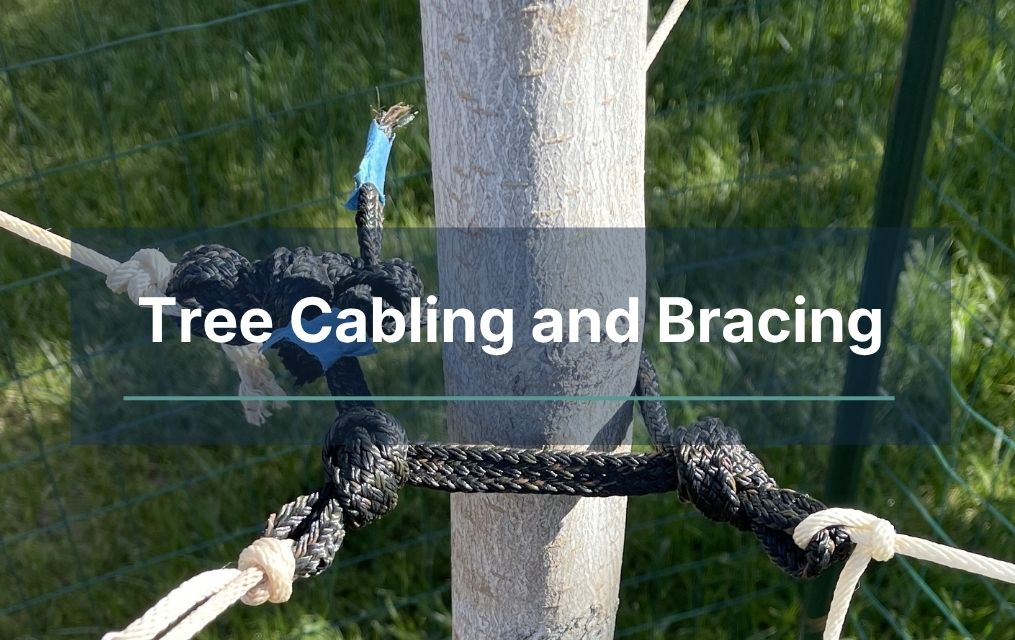
Cabling and bracing. For trees with structural weaknesses like co-dominant stems or heavy lateral limbs, support systems can reduce the likelihood of failure while preserving the tree’s canopy and value.
Removal. When a tree’s structural condition is too compromised for mitigation, removal is the responsible choice. Legacy Tree Company will be direct about when a tree has crossed the threshold from manageable risk to genuine hazard.
Who Should Get a Tree Risk Assessment?
Tree risk assessments are valuable for any property owner, but they are especially important for homeowners with large, mature trees near places frequented by people, structures or high-traffic areas, properties with trees that have been through recent construction or grading, HOAs and commercial property managers responsible for the safety of shared landscapes, anyone who has noticed visible signs of decline such as leaning, canopy thinning, or fungal growth, and property owners preparing for monsoon season who want to address potential hazards proactively.
A single assessment can prevent thousands of dollars in property damage and, more importantly, protect the people who spend time on your property.
Frequently Asked Questions
How much does a tree risk assessment cost?
Legacy Tree Company provides complimentary estimates for general tree work. Detailed risk assessments that include Tree Plotter inventory, GPS mapping, individual tree reports, and online portal access may involve a paid consultation depending on the scope of the project.
How often should I have my trees assessed for risk?
For most residential properties, an assessment every three to five years is a reasonable interval. Trees with known structural concerns, older trees, and trees in high-target areas should be assessed more frequently. After any major storm event, a follow-up assessment is recommended.
Can a hazardous tree be saved?
In many cases, yes. Cabling and bracing, targeted pruning, and improved care can reduce risk to acceptable levels while preserving the tree. Legacy Tree Company’s arborists always evaluate mitigation options before recommending removal.
What areas does Legacy Tree Company serve?
Legacy Tree Company serves Albuquerque, Corrales, Los Ranchos, Rio Rancho, Placitas, Tijeras, Cedar Crest, Belen, and Santa Fe.
Protect Your Property Before the Next Storm
The trees on your property are valuable assets, but they can also become liabilities if structural problems go unidentified. Legacy Tree Company’s TRAQ-qualified arborists use standardized ISA protocols, Tree Plotter software, and GPS-mapped reporting to give you a clear, actionable understanding of your property’s risk profile. Proactive assessment is always less expensive than emergency response.
Contact Legacy Tree Company at (505) 312-8865 or visit legacytreecompany.com/estimate to schedule your tree risk assessment.