Trees provide many benefits to the urban environment, including providing habitat for birds and other wildlife. Who doesn’t love birds around the yard? Most birds are helpful, eating bugs that might harm the trees, and generally just using the trees for nest sites, cover from predators, and lookout perches (for the predator birds!).
A little exception to that rule might be sapsucker woodpeckers. These specialized woodpeckers do eat bugs, but they also like energy-rich, sweet tree sap. They are usually noticed in the spring, when their unique feeding strategy is most evident.
There are at least two species of sapsuckers in New Mexico, the Williamson sapsucker (Sphyrapicus thyroideus) and the red-naped sapsucker (S. nuchalis). Very occasionally we get visited by yellow-bellied sapsuckers (S. varius). That last one sure sounds like a nasty insult in an old-fashioned TV western!
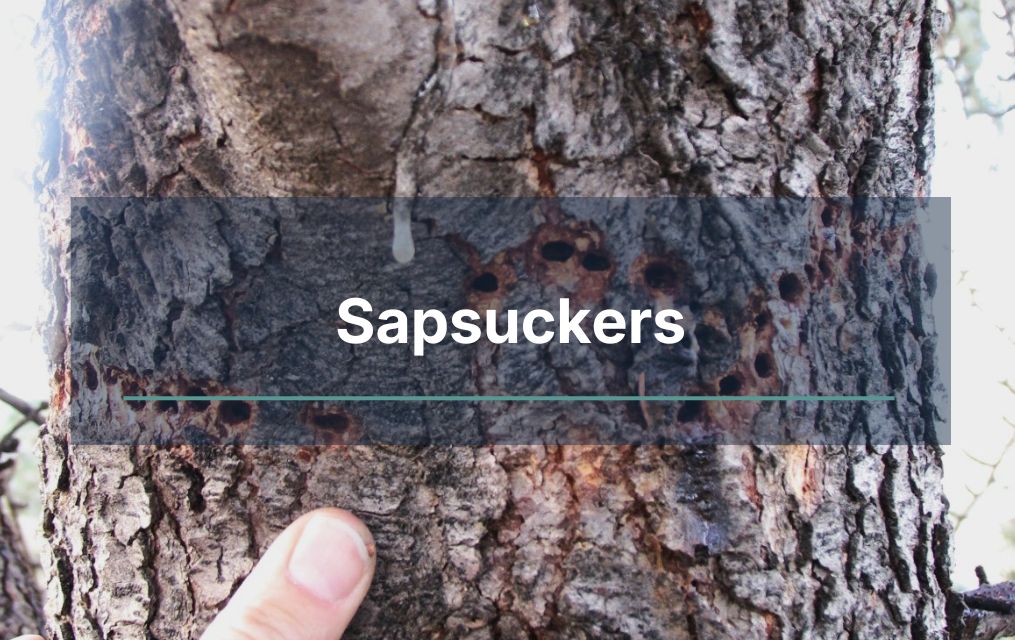
Sapsuckers get to the tree’s sap by drilling shallow holes in the bark, just deep enough to hit the living phloem layer. This tissue, found under the bark but outside of the wood, is the vascular tissue that moves sap from the leaves to everywhere it may need to go inside the tree.
When one hole dries up, they start another one right next to it. This creates a horizontal row of shallow divots in the bark (see photo below). Fortunately, this doesn’t hurt a healthy tree, and unhealthy trees have low sap flow and are not inviting to the birds. Some trees will ooze a lot of sap from these holes without being hurt.
Contact us to find out more about our Albuquerque tree removal services.